Having fun in the margins.

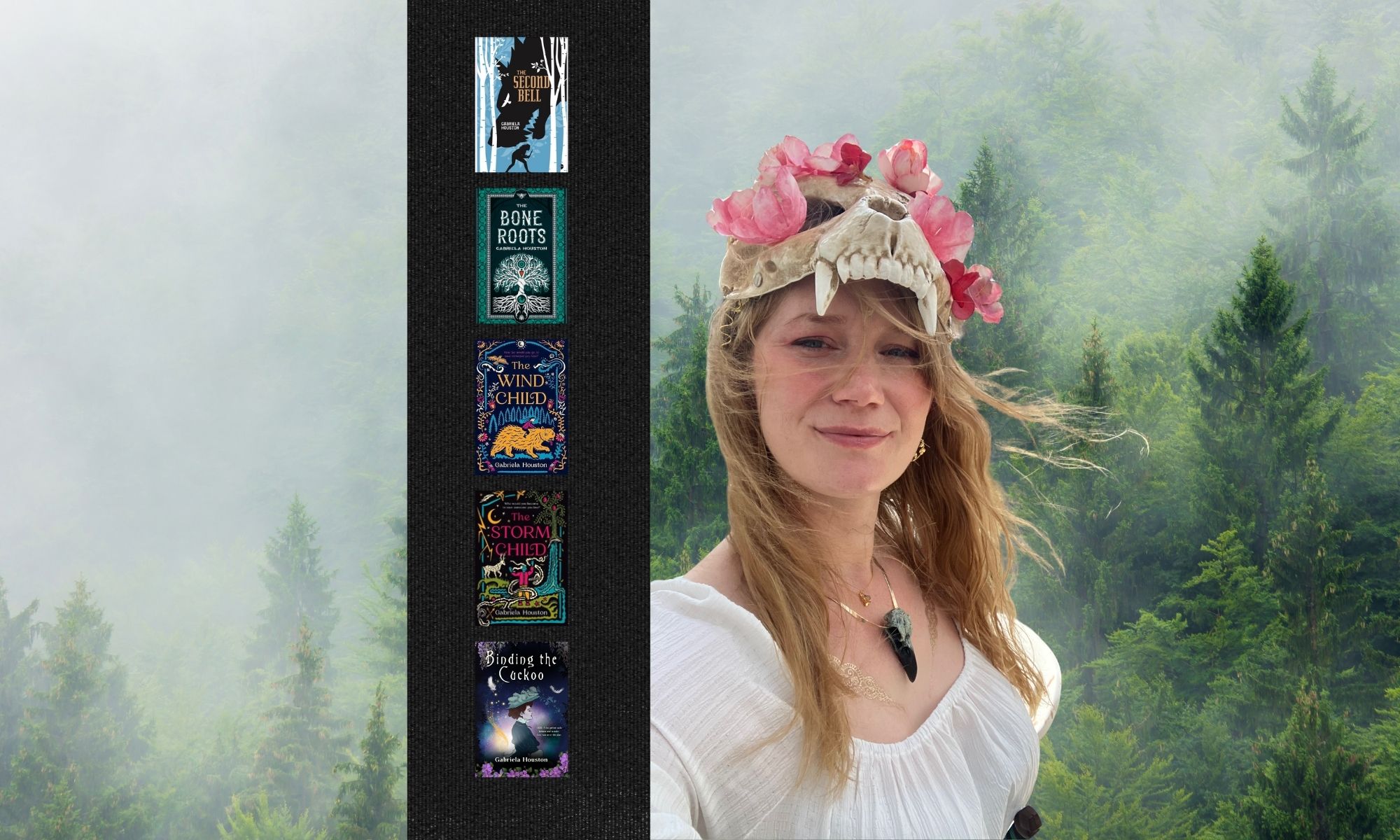
For those who know: I have recently self-published something for the first time ever: a historical romantasy, Binding the Cuckoo, set in Gilded Age London.

A drawing of a Victorian woman who's escaping, butt-first, from a window

So, to nobody’s surprise, self-publishing is hard, as I have found out. Harder by far than I’d anticipated. And, even with somewhat of a track-record, the truth is nobody is exactly waiting for another indie book. Anything that happens, happens because the author tortured themselves with yet another late-night marketing tutorial marathon. 

And so the thing that must keep you going, the thing that makes all this effort fun, cannot be the hope of a sales outcome. 

The true joy of writing, even in my more seriously-serious-Sirius books, for me sits in the little vignettes, the bits of funny dialogue on the margins of a story. A cheeky one-liner. An unhinged concept that has horrified my friends, and yet I find a way to smuggle in with a bit of cheeky humour.

I am such a serious writer, of course. An auteur, with an extra ‘eur’ for good measure. When I’m asked to pose as one. 

But inside I so often feel like a kid, in my own, custom-designed playground. Where anything goes, and the slides go up, as well as down. 

And if I want to add a little cuteness, then I shall do so. 

Below I include a little extract, which I had included in my novel for no better reason than because it amused me. If it amuses you as well, well then my heart is full. 


[an extract from Binding the Cuckoo]

She almost jumped with the shock and ended up pushing the needle into her finger.

“Ouch! Stephen, you startled me!” She put the pad of her pricked finger in her mouth.

“Are you a bampire?” he asked, his pale eyes narrowing with suspicion.

“A bampire?” Her mouth hung open, as Posy’s son climbed onto the sofa next to her.

“A bampire,” he replied and rolled his eyes. “Open.” He leaned forward and put his fingers on Hare’s chin, to which she objected weakly.

The domovoy made a chortling sound from the edge of the sofa, then bolted before Stephen could turn his attentions to the very fluffy creature at Hare’s side.

“Steffen”!” Francine Winchfield burst through the door and stood like a diminutive valkyrie, her hands on her waist, all outrage. All she needed to complete the picture was a little horned helmet. “Why you do?” She gestured towards him.

“I believe Stephen was enquiring whether I’m a…” Hare glanced at him.

“A bampire.” He scoffed at his sister and went back to inspecting Hare’s mouth.

“Stephen, I would really like to know what you’re doing.”

“So would I.”

Hare’s heart leaped at the familiar voice. She looked to the door. Ernest stood behind Francine, his hands folded behind his back. But the moment she saw his face, any hope she might have held out left her. He wasn’t even looking at her, focusing his attention solely on Stephen.

“Steffen wants to check if Aunt Edwina is a bampire.” Francine turned to Ernest and spoke in the tones of a school mistress when addressing a particularly dense student.

“Indeed.” Ernest’s eyelid twitched, like he almost wanted to glance at Hare. Instead, he chose to address his niece. “Miss Walker is not your aunt, Francie.” There was tension in his voice.

Hare tightened her lips into a line. It’s not like she told the girl to call her an aunt. What did he want, for her to be mean to a child?

“Oh.” The disappointment made Francine’s mouth droop for a moment. Ernest picked up the girl and walked up to the seat opposite Hare’s.

“Stephen, why did you say Miss Edwina was the… the thing you said?” Ernest asked.

“She drank blood!” the boy pointed an accusatory finger at Hare.

“I beg your pardon?” Hare felt as if she was having an out-of-body experience.

Ernest looked equally puzzled.

“She did!” Stephen folded his arms. “She put a needle in her finger and then blood came out and then she put it in her mouth!” He grimaced and shook his head in disgust.

“Ah, I see.” Ernest nodded seriously. “Excellent powers of deduction there, Stephen.”

“Are not!” Francine stuck out her tongue at her brother.

“So what is the next step in your investigation?” Ernest placated Francine with a pat on the head and leaned forward. He was enjoying this.

“I will check her mouth.” Stephen nodded sagely. He’d reddened with pleasure at his uncle’s praise. “You always have to check the mouth of a bampire.”

[end of the extract]

First 5 Chapters free for all subscribers.

Butter and (Un)healthy relationships in fiction

I have just finished the absolutely transformative Butter by Asako Yuzuki, which gives such nuanced thoughts about women, their perception of themselves, and how their bodies are scrutinised in public. In the context of my own writing, it made me think of what we consider a happy relationship in fiction, especially in romance. While some level of objectification feels necessary (after all, romantic partners generally have to find each other attractive), in a lot of romance and romantasy novels I read lately, a lot of emphasis is put on the size disparity between the protagonists. The female characters are usually tiny, to a point of fetishism (with the notable exception of some Sarah McLean novels), with their partners being almost grotesquely larger. 

The male romantic lead so often is portrayed as a bit dangerous, usually uncommunicative, with a very distinct strength/power disparity between himself and the female protagonist. 

I wonder just how much of those differences come from the reader’s desire to relinquish control in a safe setting, and how much comes from our society’s fetishisation of toxic/controlling relationships. I personally tend to feel a bit uneasy with such scenarios, especially when such relationships are idealised in romances. 

Whilst I’m not here to judge anyone’s preferences in reading, it is important to me to create a space in fiction for healthy, communicative and equitable relationships, and writing passion that comes from true connection, rather than the thrill of danger. And, most importantly, I want my readers to feel happy once they’re finished reading Binding the Cuckoo. I want them to feel confident that the protagonist is, in fact, quite, quite safe with her chosen partner. 

I want my Happily Ever Afters to have no caveats to them. I like to write my romance romantic, and my horror horroresque. And I tend to leave the two distinct from each other.

New Book Announcement!

There’s some exciting news, which I’ve been sitting on for a while. I have decided to dip my toes in self-publishing, emboldened perhaps by the experience of producing the anthology.

Binding the Cuckoo is an alternative-history, Gilded Age romance, inspired partially by the women’s suffrage movement and the domestic workers’ rights’ movements. 

It’s the first volume in the “Daughters of Defiance” series, each volume telling a story of a different couple within the same social circle.

Like many fantasy readers, I’ve seen the rise of the “romantasy” genre, but as a romance reader as well, I thought there is space for a genre-mash that focuses on the romance more, rather than keeping it in the background. (I think there are a lot of Outlander fans out there that would agree with me on this). 

And so this is a historical romance. Unapologetically, deliciously so. With a hint of magic and folklore, of course, because well… I’m still me. 

ABOUT THE BOOK:

In the late 19th century, a scientific marvel allows scientists to open rifts into the realms of myth. Powerful creatures, weakened and stripped of their memories, are brought to serve the whims of the wealthy elite…

In 1899 New York, Hare, a young woman with a mythical secret, finds herself trapped into servitude to the wealthy elite. When an equally desperate schoolmistress, Miss Anne Bonningham offers Hare a chance at freedom, they embark on a daring plan. Disguised as “Miss Edwina Walker,” Hare navigates the treacherous waters of London high society, solely focused on securing a marriage and escaping her past.

However, amidst the glittering balls and intricate social games, Hare finds herself drawn to Ernest, a charming solicitor torn between duty to his friend and his undeniable attraction to her. As hidden agendas surface and a vengeful figure from her past threatens to expose her true identity, Hare must make a choice: embrace a life of comfort and security or choose freedom and a love that could shatter the very foundation of her world.

Binding the Cuckoo is a story of love, deception, and the fight for self-determination in a world where appearances can be deceiving, and the line between freedom and captivity is blurred.

Binding the Cuckoo is coming out on the 15th of October, and is now available for preorder. Look below for the virtual book tour dates!

WRITING ADVICE: 1st or 3rd person POV

I asked on my social media what people would most like to see from me here. The answer was pretty unanimous: writing advice. So here it is. Let me know if there’s anything in particular you’d like me to cover here.

Now for today’s question: choosing the right narrative voice for the novel. 1st person or 3rd person POV?

From a reader’s perspective, there’s the personal preference, of course. But for a writer? The choice of voice is a crucial one.

In terms of your genre, in the first place, it’s worth asking what is the primary driver of the novel. In a fast-paced plot-driven story, the 3rd person narrative often makes more sense. It allows the writer to occasionally zoom in and out, getting closer to the character’s thoughts and emotions when necessary, but it also allows us to introduce the elements that the characters themselves might not notice or be aware of.

There’s a whole number of styles available within the 3rd person narrative. You can have the omniscient voice, high above the characters, or walk hand in hand with them, observing their every emotion. You can opt for a feigned neutrality, stripping away the adverbiage and the emotion, so nothing but the story is felt.

In the face of such a variety of options, why would you opt for the 1st person POV? 

There are some situations where the story won’t work without the more intimate knowledge of the character’s inner life. Where that inner life IS the story, in all the ways that count. Where the question of their perception, of their reliability and biases, creates the very heart of the book.

Those questions (and more I haven’t yet thought of) are what we should be asking ourselves when starting a story. Whose story is it and how much does their perception truly matter? How can we best bring out the feelings and atmosphere we’re aiming for?

That decision might often be instinctive, but it is not simple.

Pinocchio: A short story

Illustrated initials from a German fairytale book (1919 edition)

I wince as a splinter forms just above where my index finger nail grows. Just below the top layer of the skin so I can see it crystallise from the flesh, a little swirly current of pain.

#

She’s unhappy with me. I understand. I’m late, ten minutes late to be exact. Another five and I will feel a ragged splinter on the inside of my nostril. Five more and a creamy-coloured pine flake will appear just next to my iris. 

#

A boy who isn’t good might as well be made of wood, she will say with a smile stretching her perfectly-shaped lips, lips of deep blue, expertly covered with a scarlet lipstick. 

I used to think she was beautiful, when she first told me I was to go with her. I didn’t mind my father’s tears then because my love for her had hardened my heart. How well I remember them now.

#

I don’t think her beautiful now. I see the cruel look in her almond eyes as her thin eyebrows arch when I displease her. Which I can’t seem to avoid no matter how hard I try.

#

The sawmill job was her idea. There was no need for it. But she didn’t like the flowers I picked for her. A gift of expected spontaneity.

A job would mean I could earn money to buy her gifts worthy of all the gifts she’d bestowed on me. 

A job at the sawmill was a delicious idea, so she said. She actually licked her lips, while looking at my face, searching for the slightest sign I wished to disobey her. There was none. I’d learned to keep my face like a mask of flesh before her.

And now I’m late. The shipment arrived an hour later than it should have and though I worked fast, I could not escape with the chiming of the clock. She won’t listen to my excuses. Maybe, if I’m lucky, she will turn me into a log so I don’t have to face the work again tomorrow.

#

Trees die slowly. People don’t tend to know that. They don’t tend to think of it.  

But I can hear the fallen giants as they’re moved, chained through the yard, brothers in pain, huddled together on the huge trucks, knowing they’re dead though they have not yet the peace of it.

I smile as I sign the delivery form. I can’t hear their cries. I smile at the delivery man as well, every morning I smile and listen to him talk of the traffic and his lazy brother who is a lumberjack though he’s unsuited for “man’s work”, as the delivery guy says.

I nod like I care, resting my hand on the bark of the tree closest to me. Some little comfort, I hope. An apology maybe. Useless either way.

#

I stand by the saw as their trunks are split into long planks. Even my ear defenders can’t muffle out their warning song. The trees sing to their waiting brothers to tell them there is danger, there is death coming. There’s nothing none of them can do. I can smell their sap as it trickles down, its amber drops hardening before they even touch the floor.

Every day I do this. Every day I whittle at them, like she whittles away parts of me at night.

#

And now I’m late. 

I scale the stairs two at a time, and pause to compose myself before I knock on the door.

Come in, she says. 

I put a smile on my face.

You’re late, she says. She sounds angry but I can see the delighted twinkle in her eyes, as she looks at me from below her long eyelashes.

I’m very sorry. I tried to get here as fast as I could, I say, truthfully. My eye began to itch just as I reached the top of the staircase but I would not look in the mirror. It would please the part of her which needs no encouragement.

She leans back in her chair and smoothes out the wrinkles in her dress. A dull sensation in my knees reminds me I’m amiss. I kneel in front of her and kiss her hand. The dullness in the knees disappears, dissolving into the fleshy warmth as if it was never there.

Now, I thought we should stay in tonight, she said, clapping her hands like an over-excited toddler. I’m not fooled. But she gets creative in public, so I nod with an enthusiasm I haven’t felt in years.

We sit on the ugly orange sofa she loves and watch the TV, some kind of a true crime show she likes. I sit on the floor in front of her, trying to focus on what’s happening in case she asks me about it later. I try to ignore the feeling of her icy fingers running through my hair and gently caressing my neck.

The show is good, better than I expected. She is humming softly, a vibration coming out like a purr from the back of her throat. A soft rustling. Must be her wings, I think, her large, ugly wings fluttering in the draught.

There is no draught. Something falls around my lap as softly as snowflakes. At first I can’t tell what it is. Violet and brown, tinged with red. 

Bark. Plane-tree bark. She’s been peeling the long thin translucent strips of it from my neck. I jump up and instinctively draw my hand to my neck. It feels dead, smooth. Wet. Sticky. 

I look at my sap-covered hand.

She just laughs, a deep belly laughter which shakes her whole frame. 

For today, she says picking up a small piece of bark. For wanting to run away.

I didn’t… I start. There’s no point. Because I did. It was all I wanted to do all day. What I wanted every day.

She takes my silence as an affront just as she would my words. Suddenly annoyed, she purses her lips and snaps her fingers.

Warmth spreads through my neck, and I open my mouth, suddenly breathless as the pain hits me. I look at my red hands, and feel a trickle of blood pour down my once-more fleshy neck, right between my shoulder-blades.

Clean it up, she says before she shuts her bedroom door.

I look at the strips of my skin for a moment. Then I walk to the bathroom and rummage through the mirrored cabinet above the sink. I have all the supplies ready. I spray the disinfectant on the open wound of my neck. The smell of it turns my stomach and I throw up into the toilet bowl. I kneel and lean against the wall. I just want to hide, to sleep. But my neck is still bleeding where she peeled the skin off. With shaking hands I place a clean sheet of gauze over the spot.

 I pull out the sofa bed and try to find a comfortable position. I’m bone tired, and soul tired and tired in all the ways in between. But I don’t find it easy to fall asleep. I want to think she’s spent her energies for the night. That she won’t crawl out of her room as I sleep and touch my chest with her icy fingers, turning my lungs to timber so I wake up with a start, feeling my flesh claw for the oxygen I can’t draw. 

A little boy who isn’t good, might as well be made of wood. 

***

The next morning I’m at the sawmill as usual. Where else would I be. I make use of the free coffee they serve from the large kettle. It tastes awful and does nothing to  mask the smell of the wood chippings and the sap. The best part of the job that smell, Jack, a young guy with a goatee and an already spreading gut says as he breathes in deep, like we’re at the beach. 

I mumble into my paper cup. 

Hi Nocchio.

I turn around. Molly, the accountant, comes to the mill once every couple of weeks to help sort out the wages. She is tall and heavy-set and nothing like the one I live with. That in itself makes me like her. 

Hi Moll, Jack fills the silence between us. 

But she doesn’t look at him. She smiles at me, a little shy smile which forces her eyes down even as the corners of her narrow mouth go up. Anyway, I better get going, she addresses her feet and rushes past me.

I look after her. She smells nice. Sort of sweet, like icing on a donut. 

Looks like Big Moll has a thing for the handsome Italian lad! Jack smacks me hard on my back, sending a sharp tendril of pain up my neck. I turn to him, angry. His eyes are wide with surprise at my expression.

Hey, man, I don’t mean nothing by it. She’s a nice enough girl. Just, you know, I assume not your type.

And what’s my type, I say, already turning away from him. A large pine, shorn of its branches, lets out a piercing scream as it’s cut in two. It will make a very fine MDF board. Oh no, I check the sheet. This one goes straight to Ikea. 

#

At lunchbreak I go to the cafeteria. My neck throbs under my turtleneck and I sweat. I buy a baked potato with cheese on top. The cheapest thing on the menu. 

I sit down at the only unoccupied table. The guys I work with are friendly and I don’t want friends. 

My last friend is a novelty hat and umbrella stand in our hallway. 

So I just sit quietly. 

Some of the guys thought it was because my English was no good. But that made them try an teach me. 

I kept silent, and eventually they stopped. 

May I join you?

I look up but Molly is already seating herself opposite me, shuffling around till she’s pushed the bench a few inches further from the table. She has a full plate of roast and potatoes and overcooked vegetables. 

Is this all you’re eating? She points at my plate. 

I shrug.

She looks at her plate, all self-conscious all of a sudden.  I feel a sudden pang of pity.

I already had a sandwich. Got hungry early, I lie. I rub my nose out of habit. 

Ah. She brightens up. So how are you fitting in here? You always seem to sit alone? So which part of Italy are you from? I’ve been to Venice last year, a sort of a last hurrah with my uni friends before starting work. She giggles and shuffles a bit in her seat, the prepared conversation starters tumbling from her. 

I should tell her I dont’ want the company. That’s what the fairy would like me to say. I smile instead. Venice is very beautiful, isn’t it, I say, though I have never been. Doesn’t matter. I’ve seen the postcards. Houses on water. I get it.

She seems relieved I joined the conversation. She has a snag tooth on the left of her upper jaw. I like the asymmetry of it. 

I let Molly talk as she tells me about her upbringing, her Irish parents and her childhood by the sea. She went to uni because she felt she was supposed to and emerged with a degree she didn’t know what to do with. The accounting courses got her this job, which she likes, surprisingly. 

I’m interested, in spite of my better judgement. Her life feels so normal and so safe. Being around her feels like settling down inside a warm duvet. 

She asks me out for a drink that night, which brings me back to reality. 

I can’t make it, I have an sick relative I take care of. No, I can’t make tomorrow either. Or any other day. Yes, the welfare carers don’t have the resources to support working people like us. Yes, the cost of private care is prohibitive. Yes, it’s a shame. Yes, yes, yes. 

I let her fill in the blanks in the information I provide about myself. 

She looks dispirited, but cheers up almost immediately. We have the lunchbreaks at least.

Yes, we do.

#

The next few weeks are a comfort I don’t date trust. Every day, I watch out for Molly in the morning as I walk into the milll yard. I smile back at her and wave and think of nothing else till it’s time for lunch. 

At home I take care to not show a change. If the fairy thought the sawmill was no longer a torture she’d make me find another job instead. If she suspected I spoke to people at work she would turn my tongue to wood. If she thought I wanted to run off, she’d root my feet to the ground, and turn my heart to sawdust.

#

I can’t tell Molly the truth. The truth is ridiculous. The truth is wholly, entirely unbelievable. The lies are easy. The lies are comfortable. The lies no longer have a consequence. 

#

We skip the work one day. Call in sick. I’m never sick. Nobody bats an eyelid. 

We meet at the corner of the part of town I hadn’t visited before. The dilapidated shopfronts and boarded-up deli are not exactly romantic, but the rush of the temporary escape is. The sky is grey and it smells like it’s going to rain. 

I don’t mind. I like the rain. Molly shows up in an ill-fitting pink skirt. It smells like a new polyester purchase off some dubious online store. I like it. 

I like everything about Molly. I like how she is as imperfect as she can be with a face that was bred not carved, with a body grown not turned. 

When she closes the motel room door behind us, I smile at her.

She walks up to me and put her arms around my waist, resting her chin on my chest so she can look up at my face.

She’s chewing her lip. 

She must be nervous. 

No, not nervous, she’s smiling.

She kisses me and I let her push me onto an armchair. 

She pulls my sweater off over my head. You’re very good to me, she says.

Such a good man, Nocchio.

I open my eyes. Her lipstick is different today. Looks purple in the morning light. 

Are you a good man, Nocchio?

No, not purple. The kiss smeared a bit of it on her chin and I wipe it away with my thumb. Red, bright red. Red on blue, blue lips.

Because I’m not so sure now. Are you a good man, Nocchio? A truthful man?

I hold my breath as I look up into Molly’s cold eyes. The almond-shaped eyes. 

Little boys who are not good, might as well be made of wood.

The fairy’s hands trace patterns on my chest, which tightens in swirls like frost on a windowpane. Rosewood swirls imbedded in the flesh. The fairy likes to make my pain pretty. 

I’m frozen in the chair. 

I can feel a tear on my cheek. She catches it with her nail, and lifts it off my skin so I can see. The tear hardens into golden amber. She flicks the end into a long curved needle. She eases it through the hole in her ear, her once more small, slender ear, She moves her head this way and that, admiring herself in the reflection in my eyes. 

I move before experience can curb the emotion of the moment. I surprise her as much as myself. Once the illusion of Molly is shed the fairy’s body is once more small, brittle-boned. And my hands are strong. I grab her waist and push her off me. 

Her eyes open wide for a moment, then immediately narrow into angry slits. She spreads out her ugly insect wings, and lifts up from the floor. The room is so small she nearly touches the ceiling. 

Little boys who are not good, might as well be made of wood, Nocchio.

I’m not a boy anymore, I hear myself say. 

Stupid, stupid bravado. What can I do to her. Better fall to my knees. Beg for forgiveness. Worship her beauty and power and cruelty and hope she stops the stiffening on my joints and the itching on my legs as the skin turns to bark and already flakes away from the flesh, though the blood is still pumping through the muscle and bone, in the meat still in need of encasing.

Instead I throw myself at her. I tear the gentle film of her wing with my hooked fingers, fingers of oak as soon as they touch her.

She screams, a shrill, inhuman sound. She lunges at me, though I’m bigger, though I am stronger and heavier. She would do better staying away, reducing me to splinters with a flick of her wrist. 

I grab her neck. I squeeze, hoping to drain all life from her before she drains mine.

My back turns rigid. But my hands still hold. My chest hurts as the fibres in my lungs harden. I don’t let go. Leaves sprout from my head, the hawthorne’s brutal thorns creep under my skin. 

I don’t let go

Little boys… who are not good… might as… well… be made… of… wood… 

My vision blurs. But I can still feel her neck in my hands. My hands harden into roots still wrapped around her throat. 

#

I would smile if I could as her body slackens, once the vice of her own moulding squeezes the last breath from her. 

I’ve done good.

Life with no fear?

From the series of “random thoughts I can’t shake off”, I got to thinking about how a highly socialised animal like a human function, were their brain/body unable to feel fear. Partially the question was inspired by a short story “Shudder” by Daniel Morden’s upcoming collection “Strange Tales”.

In most of the animal kingdom, the lack of fear usually means death. A parasite infects a mouse, making it fearlessly approach the cat. The cat eats the mouse, thus providing a fine intestinal habitat for the parasite.

However, in human societies, the lack of survival instinct on this basic level would not mean automatic demise, seeing as tigers and bears seldom roam our streets anymore.

Additionally, some types of survival-based behaviours in humans are simply taught. As a child you learn, for example, that should you be mean to your friends, they will cease to BE your friends. That is unpleasant. A small child might not have a concept of ethics, but they understand the unpleasantness of being left out. So they learn to avoid behaviours that cause it. Same with pain. If you touch the fire, your hand will sting. You learn not to touch the fire. In most people, they learn to experience fear in tandem with the avoidance instincts.

So what if you simply did not experience fear? You wouldn’t know you don’t experience it, necessarily. Humans find iti hard to conceptualise experiences that are alien to them. To a person with aphantasia(where you can’t picture things in your brain), the concept of imagining and conceptualising things develops in a different ways. The brain wires out the gaps, and creates a new mode of behaviour. Yet a seeing person with aphantasia might eventually realise that others do not experience the world in the same way, because the description of the process of imagining something with your eyes closed is related to something they are ALREADY EXPERIENCING.

Not so for a person with no fear. The heart palpitations, the sweaty palms, the fight of flight response… How can that be explained to someone who does not have the same physiological response.

Another question I’m mulling over is how do we categorise fear for such a hypothetical person? Are anxiety, the “jump scare” response, dread and the tingling warning that something wicked this way cometh all one and the same? What about the fight or flight response? Are fear and aggression linked?

Now for the benefits. It’s easy to conceptualise the negative result of experiencing no fear. Would you jump out at the last moment out of the way of a speeding car? Run from suspicious people eyeing you in a dark alley? Possibly, depending on your analytical skills and calculated risk avoidance. But something I wondered about was: would there be long-term positive consequences to the lack of fear response? Often, different pathways wiring their way in the human brain, can bring unexpected benefits. Once more, for people with aphantasia, they can often find their recovery from traumatic events and grief somewhat easier, as their brains don’t play the nasty tricks on them, replying in technocolour the most devastating experiences of their lives. So what, if any, benefits could there be to the lack of fear response?

One possible positive result that popped into my mind is the advantage that comes with risk-taking in business, and life in general (though that can just as well be a negative, as the lack of fear wouldn’t influence the person’s other talents and skill-sets. A bad gamble is the more likely result of over-confidence and underestimating the consequences). What about the joie de vivre? Without fear, would we all truly carpe the hell out of that diem? Or would we once again underestimate the threats? I somehow imagine the survivor bias would be strong in any research ever done on the subject.

So here it is: My list of questions with no answers. Sometimes I like it better this way.

The top three things which cause me to throw a book across the room

So the title is somewhat exaggerated. I don’t really throw books across the room, but when faced with any of the below, I most certainly close them with disgust. As nearly every fiction writer, I’m a reader first. And in my reading journey, I’ve come across many lapses of writerly/editorial judgement. Many forgivable. Most forgettable. But then again, there’s the other type…

Of course writing it subjective, and so what repels me, might be the height of entertainment for others. But here are some things I absolutely hate coming across in fiction:

  1. Pontificating is the top of the list. In the era of social media, being loud about every single thought running through our minds has become endemic. So much so that on occasion writers forget what their job it: to transport the reader into the world of their book. It is expressly not the place to copy and paste your least popular tweet, which you feel really ought to have gained more traction based on its pure incisiveness. Whether it’s politics you wish to discuss, or the state of education in your home country, or the way you think people REALLY OUGHT TO dress for an evening party, your book is not the place to vent those views. If it doesn’t serve the story, it belongs in the editorial bin.
  2. Gross self-inserts. I was reading a novel some time ago, by a rather well-known author, where the young, feisty female protagonist is mooned over (in the most inappropriate and creepy way, frankly) by her, let’s call him “mentor”. This mentor is much older, in a position of authority over the female protagonist, and has no qualities that could possibly be attractive to the object of his desire. Yet, at a pretty randomly chosen point, the girl notices him. She suddenly sees him in a different light. The bumbling, boring-as-toast older man becomes interesting and masculine in her eyes. Little things she never noticed before light up a fire within… For no reason. Literally nothing’s changed in the older man. He did nothing note-worthy (in front of the female protagonist at least). And as the pages droned on, one couldn’t help but see the somewhat disturbing similarities between the mentor character and the author. And of course, I wouldn’t begrudge anyone the private fantasy of “punching above one’s weight”. But when written down, it is painfully obvious that that’s exactly what it is: the author’s self-indulgent fantasy.
  3. Ye olde stylle of speech. Certain genres are particularly prone to this grievous sin. Sometimes a writer really really wants to show that the book is in fact set not in anything approaching a contemporary setting, but could very beautifully fit in the standards of the olden days. The temptation to rewrite everything in a style neigh incomprehensible to the modern reader can sometimes be too much to resist. The easiest way to indulge the urge is to pile in archaic vocabulary, mess with syntax, sprinkle in some schoolboy french and voila! A book with prose that resembles nothing in the history of the English language is ready! And while it doesn’t bother everyone equally, I find it distracting, occasionally hilarious (when eyes become “orbs” for example, to emphasise that before 1950s vocabulary was so much more refined), and mostly disappointing. There are many ways to transport a reader to a particular time and place. Misusing archaisms is not one of them.

A Writer’s Love Letter to Autumn

Illustrated initials from a German fairytale book (1919 edition)

I have recently realised that pretty much all the books I’ve written begin in the Autumn. 

I suppose it isn’t surprising, as it’s my favourite season, though perhaps not the reasons that make it so ‘Instagrammable’: Since I wasn’t brought up with Halloween, the idea of knocking on strangers’ doors demanding sweets will never stop being weird to me, and pumpkin spice latte tastes like feet frankly.

The colours are nice, and a cosy sweater is a source of endless pleasure, of course, but neither is what makes me gravitate towards that season with every fresh page of a new book. 

There is an excitement in the seasons of change. After the lazy, hazy Summer and before the seemingly endless Winter, you have movement, a shift, the promise of something new and exciting, and different.  

In real life, like in my writing, I’m fearful of stagnation. The movement and change in the environment propel me towards building up my own momentum, refocusing on my own direction. And how natural it is, therefore, that Autumn is when my stories begin, where everything within the characters and their world propels them towards something new, something different. 

While many view this season with a sense of melancholy, the dread of the shorter days, and colder nights, they fill me with a sense of excitement. There is movement in the change, and I view change as necessary. It’s the striving of it, the hopefulness that once the leaves are shed, there will come a time when the buds form again. 

And when the wind picks up, and the soft ground squelches under your boots, you can look for the same hopefulness and determination.

AI and the Soul of Art

Illustrated initials from a German fairytale book (1919 edition)

An online app was making the rounds yesterday all around the social media. Writers and readers would input a prompt into a box and an AI algorithm would create a digital painting to correspond to that prompt.

You could play around with the art style and themes and, there is no doubt, some of the paintings produced were visually stunning.

I have always found the concept of AI being programmed to produce art icky. Whether it’s for writing, painting or music composition. Not because I don’t believe computers will ever be able to produce something as good as humans do: I am not as naive as that.

The idea, however, for creating the planned obsolescence for the human soul should bother us all.

My friend pointed out that this new, computer-created art has no soul. I thought about that, and I think it really doesn’t matter, truly. I believe that art, in whatever medium, has two souls.

One is the soul of creation, the drive to make something new, to translate emotions into something yet more ethereal.

The second soul of art is on the recipient side. The emotions and feelings it evokes. The memories is stirs up.

Those two souls are, to me, quite separate from each other.

The art created by the AI has the power to create an emoitonal response through the lines and colours, through the hints of form. The lack of human involvement at the point of creation changes nothing at the point of art consumption.

That word, consumption, is the key for me though. The capitalist system most of us live under, with its relentless pressures, already narrows our field of vision. It robs most of us of resources and time, for the benefit of very few. It tells us we have to monetise each love and passion, because worth is measured in supply and demand, not in emotional value added.

Turning art into one more thing for us to passively consume, stripping off the drive to create (because how can you compete with a self-teaching machine’s perfection) and thus leaving us with what? More time to work for others and more time to buy what we don’t need with money we don’t have.

There is a global rise in people being diagnosed with all kinds of mental health issues, with a deficit of this, and an excess of that. Anxiety, attention, keeping still, keeping productive, keeping emotionally numb. The pathologising of a normal human reaction to the messed up system we have created, so as not to find fault with the system itself.

How much easier to tell you your art, your soul, is not worth the work. Just consume what the computer has spat out, then medicate for the sadness of a lack of agency till you are once more satisfied, or an approximation of satisfied that will keep the owners of this world in business.

AI-generated image of mountains
AI-generated image of abstract figures in a psychodelic setting

My most anticipated books of 2021!

I thought what better way to celebrate the death of the awful 2020 but by celebrating the art that makes it all a bit more bearable?

So here are some of my most anticipated reads of 2021, in no particular order, if you’re wondering what this author likes to read in her spare time!

I can’t wait to get my teeth into all of them! 

Rule of Wolves by Leigh Bardugo

The wolves are circling and a young king will face his greatest challenge in the explosive finale of the instant #1 New York Times-bestselling King of Scars Duology.

Firekeeper’s Daughter by Angeline Boulleey

Debut author Angeline Boulley crafts a groundbreaking YA thriller about a Native teen who must root out the corruption in her community, for readers of Angie Thomas and Tommy Orange. 

As a biracial, unenrolled tribal member and the product of a scandal, eighteen-year-old Daunis Fontaine has never quite fit in, both in her hometown and on the nearby Ojibwe reservation. Daunis dreams of studying medicine, but when her family is struck by tragedy, she puts her future on hold to care for her fragile mother. 

Now, Daunis must learn what it means to be a strong Anishinaabe kwe (Ojibwe woman) and how far she’ll go to protect her community, even if it tears apart the only world she’s ever known

The Witch’s Heart by Genevieve Gornichec

Angrboda’s story begins where most witches’ tales end: with a burning. A punishment from Odin for refusing to provide him with knowledge of the future, the fire leaves Angrboda injured and powerless, and she flees into the farthest reaches of a remote forest. There she is found by a man who reveals himself to be Loki, and her initial distrust of him transforms into a deep and abiding love.


Their union produces three unusual children, each with a secret destiny, who Angrboda is keen to raise at the edge of the world, safely hidden from Odin’s all-seeing eye. But as Angrboda slowly recovers her prophetic powers, she learns that her blissful life—and possibly all of existence—is in danger.


With help from the fierce huntress Skadi, with whom she shares a growing bond, Angrboda must choose whether she’ll accept the fate that she’s foreseen for her beloved family…or rise to remake their future. From the most ancient of tales this novel forges a story of love, loss, and hope for the modern age.


Composite Creatures by Caroline Hardaker

How close would you hold those you love, when the end comes?

In a society where self-preservation is as much an art as a science, Norah and Arthur are learning how to co-exist in their new little world. Though they hardly know each other, everything seems to be going perfectly – from the home they’re building together to the ring on Norah’s finger. But  the earth is becoming increasingly hostile to live in. Fortunately, Easton Grove is here for that in the form of a perfect little bundle to take home and harvest. You can live for as long as you keep it – or her – close. 

The Jasmine Throne by Tasha Suri

Author of Empire of Sand and Realm of Ash Tasha Suri’s The Jasmine Throne, beginning a new trilogy set in a world inspired by the history and epics of India, in which a captive princess and a maidservant in possession of forbidden magic become unlikely allies on a dark journey to save their empire from the princess’s traitor brother.

Sistersong by Lucy Holland

King Cador’s children inherit a land abandoned by the Romans, torn by warring tribes. Riva can cure others, but can’t heal her own scars. Keyne battles to be seen as the king’s son, although born a daughter. And Sinne dreams of love, longing for adventure. 


All three fear a life of confinement within the walls of the hold, their people’s last bastion of strength against the invading Saxons. However, change comes on the day ash falls from the sky – bringing Myrdhin, meddler and magician. The siblings discover the power that lies within them and the land. But fate also brings Tristan, a warrior whose secrets will tear them apart. 


Riva, Keyne and Sinne become entangled in a web of treachery and heartbreak, and must fight to forge their own paths. It’s a story that will shape the destiny of Britain.


The Gilded Ones by Namina Forna

Sixteen-year-old Deka lives in fear and anticipation of the blood ceremony that will determine whether she will become a member of her village. Already different from everyone else because of her unnatural intuition, Deka prays for red blood so she can finally feel like she belongs.


But on the day of the ceremony, her blood runs gold, the color of impurity–and Deka knows she will face a consequence worse than death.


Then a mysterious woman comes to her with a choice: stay in the village and submit to her fate, or leave to fight for the emperor in an army of girls just like her. They are called alaki–near-immortals with rare gifts. And they are the only ones who can stop the empire’s greatest threat.


Knowing the dangers that lie ahead yet yearning for acceptance, Deka decides to leave the only life she’s ever known. But as she journeys to the capital to train for the biggest battle of her life, she will discover that the great walled city holds many surprises. Nothing and no one are quite what they seem to be–not even Deka herself. 

This Poison Heart by Kalynn Bayron

Briseis has a gift: she can grow plants from tiny seeds to rich blooms with a single touch.

When Briseis’s aunt dies and wills her a dilapidated estate in rural New York, Bri and her parents decide to leave Brooklyn behind for the summer. Hopefully there, surrounded by plants and flowers, Bri will finally learn to control her gift.

When strangers begin to arrive on their doorstep, asking for tinctures and elixirs, Bri learns she has a surprising talent for creating them. One of the visitors is Marie, a mysterious young woman who Bri befriends, only to find that Marie is keeping dark secrets about the history of the estate and its surrounding community. 

 Up against a centuries-old curse and the deadliest plant on earth, Bri must harness her gift to protect herself and her family.

Witches Steeped In Gold by Ciannon Smart

Iraya Adair has spent her life in a cell. Heir of an overthrown and magically-gifted dynasty, she was exiled from her home on the island nation of Aiyca when she was just a child. But every day brings her closer to freedom – and vengeance. 

Jazmyne Cariot grew up dressed in gold, with stolen magic at her fingertips. Daughter of the self-crowned doyenne, her existence is a threat to her mother’s rule. But unlike her sister, Jazmyne has no intention of dying to strengthen her mother’s power. 

Sworn enemies, the two witches enter a deadly alliance to take down the woman who threatens both their worlds. 

But revenge is a bloody pursuit, and nothing is certain – except the lengths Iraya and Jazmyne will go to win this game.

Two witches. One motive. And a very untrustworthy alliance.

The Betrayals by Bridget Collins

In an exclusive institution tucked away in the mountains the best and brightest study an arcane and mysterious game, as they have for centuries. But times are changing, and traditions being overturned – the truth will come out…


Lore by Alexandra Bracken

Every seven years, the Agon begins. As punishment for a past rebellion, nine Greek gods are forced to walk the earth as mortals, hunted by the descendants of ancient bloodlines, all eager to kill a god and seize their divine power and immortality.

Long ago, Lore Perseous fled that brutal world in the wake of her family’s sadistic murder by a rival line, turning her back on the hunt’s promises of eternal glory. For years she’s pushed away any thought of revenge against the man–now a god–responsible for their deaths.

Yet as the next hunt dawns over New York City, two participants seek out her help: Castor, a childhood friend of Lore believed long dead, and a gravely wounded Athena, among the last of the original gods.

A Psalm of Storm and Silence by Roseanne A. Brown

The highly anticipated second—and final—book in the immersive fantasy duology.

Karina lost everything after a violent coup left her without her kingdom or her throne. Now the most wanted person in Sonande, her only hope of reclaiming what is rightfully hers lies in a divine power hidden in the long-lost city of her ancestors.

Meanwhile, the resurrection of Karina’s sister has spiraled the world into chaos, with disaster after disaster threatening the hard-won peace Malik has found as Farid’s apprentice. When they discover that Karina herself is the key to restoring balance, Malik must use his magic to lure her back to their side. But how do you regain the trust of someone you once tried to kill?

As the fabric holding Sonande together begins to tear, Malik and Karina once again find themselves torn between their duties and their desires. And when the fate of everything hangs on a single, horrifying choice, they each must decide what they value most—a power that could transform the world, or a love that could transform their lives.

She Who Became The Sun by Shelley Parker-Chan

She’ll change the world to survive her fate . . .In Mongol-occupied imperial China, a peasant girl refuses her fate of an early death. Stealing her dead brother’s identity to survive, she rises from monk to soldier, then to rebel commander. Zhu’s pursuing the destiny her brother somehow failed to attain: greatness. ..