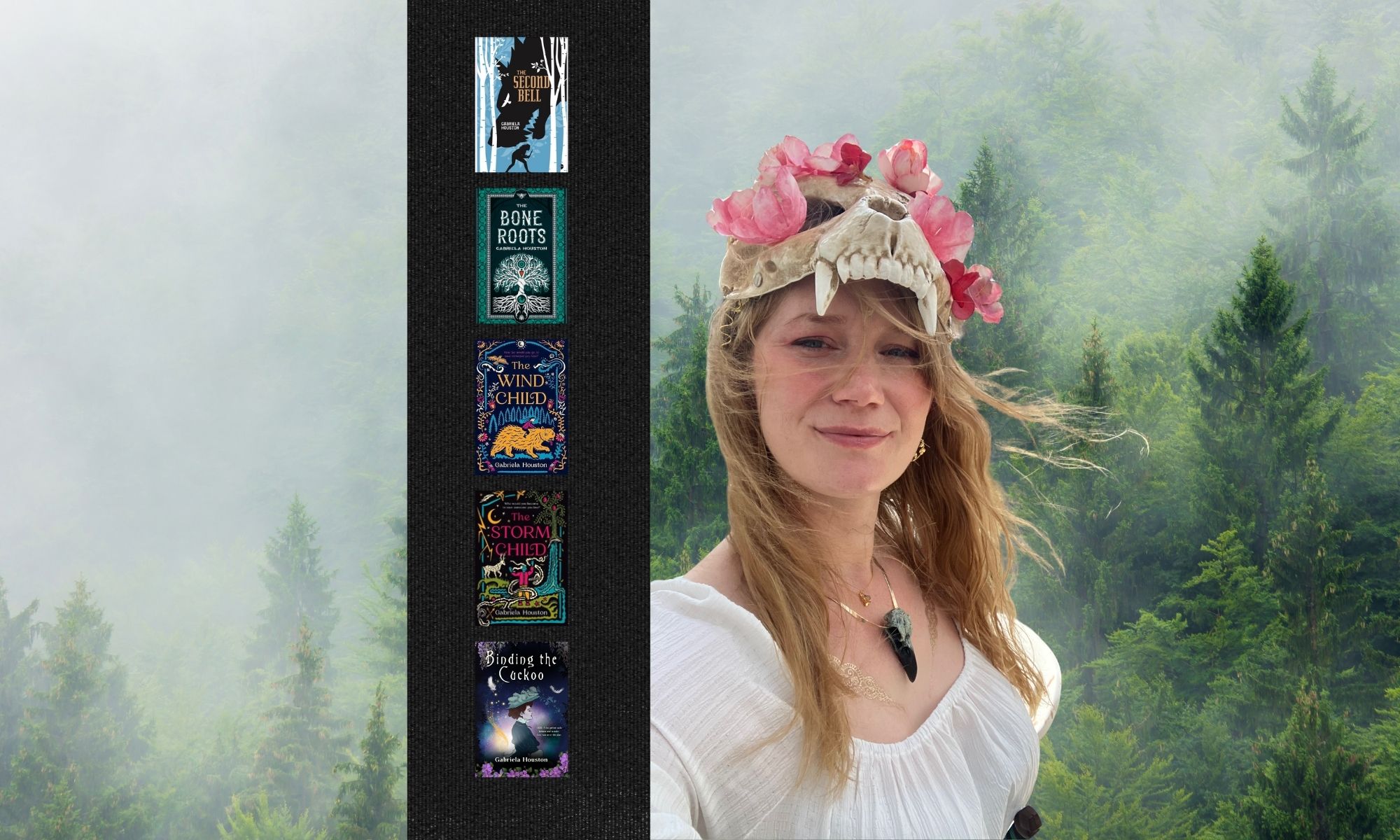
My most anticipated books of 2021!


THE SECOND BELL named one of SFF180’s 31 most anticipated 2021 Fantasy novels!

A friend sent me a link to this yesterday!
My debut, The Second Bell, coming out in March 2021 from Angry Robot, has been listed as one of SFF180’s 31 most anticipated Fantasy novels of 2021!
I’m so incredibly chuffed and grateful to be listed alongside Tasha Suri’s The Jasmine Throne (whose books, Empire of Sand, and Realm of Ash, inspired by the Mughal Empire, I absolutely LOVED), as well as some really exciting debuts, The Witch’s Heart by Genevieve Gornichec (a Norse retelling about the wife of Loki), and Son of the Storm by Suyi Davies Okungbowa, the first volume of a new fantasy trilogy inspired by the pre-colonial empires of West Africa!
There are many more amazing books on that list, so I link the video below, so you guys can have a look!

COVER REVEAL for THE SECOND BELL

The cover for my book baby is finally out!
It’s a beauty, I know! The team at Angry Robot had a real vision for the cover, and they’ve all been so gracious and patient with my many comments and suggestions and this is the final version, done by their very talented designer, Glen Wilkins! I’m a very happy, very grateful author.
Check out the Tor article and an interview with me here.
The Second Bell comes out March 2021!
Salka has to survive in a world which thinks her a monster. She seeks to explore the possibilities of her striga heart even as her mother is willing to sacrifice all to stop her!
BOOK DEAL NEWS!

Announcement time!
I’m beyond excited to finally be able to say it: my book will be a real thing. A real papery thing! With a pretty, pretty cover, a fabulous editor and a wonderful marketing team behind it and a lot of other things commonly associated with published novels!
The fabulous Eleanor Teasdale from Angry Robot Books has acquired my Adult Slavic Mythology-inspired fantasy novel, The Second Bell, and it’s due to come out Spring 2021.
You can read The Bookseller announcement here.
It’s a story of a young striga woman, Salka, who grows up in a world which believes her to be a monster. She struggles to harness the power of her second heart even as her mother is willing to sacrifice everything to stop her.
Here’s something nice my editor, Eleanor Teasdale, said about The Second Bell: “When I first heard the pitch for the book, I was worried it was too good to be true. Then it arrived in my inbox and blew me away with its magic. It’s a story with power, heart and the joy to be found from looking within yourself.”
I can’t wait to share this book with you all!
Agent Representation Announcement!

Super excited to announce I have signed with John Baker from the well-regarded Bell Lomax Moreton Agency!
John found my Twitter pitch during last September’s PitMad event on Twitter (SO worth participating if you’re seeking representation).
Having someone so tremendously enthusiastic and knowledgeable in my corner makes all the difference.
It’s tremendously important to have an agent who shares your vision not just for the one book but for your writing career as a whole, and I was so impressed by how well prepared and full of ideas John was when we met for an interview/three hour long coffee.
I look forward to a long and fruitful partnership!
The Joy and Wonder of Beta Readers

I’m not impatient, not at all.
I’m just sitting here quietly, as my marvelous beta readers are doing their thing. For the uninitiated, beta readers are all of those wonderful people in your life (or on the web, depending on your preference), who are the first people to read through your novel (who are not you, or some version of you).
Those are the people who will ruthlessly point out anything that simply doesn’t work, that jars, that bores them. They are also, hopefully, the people who will tell you exactly why they love your manuscript.
I’m lucky enough to have a few people in my life, who I know will not sugarcoat it, and will tell me exactly where I might have lost the plot a little bit, or where the stakes are unclear. I have the good fortune of having two local writer-friends, each extremely talented in their own right, and each with completely different expectations/interests. In beta-reading context this works brilliantly for me, as each one of them will focus on a different aspect of my novel, and come up with a different way in which I can improve it.
One of my writer-pals is extremely plot-focused, expecting each page to hook her and bind her to my characters, so that she simply can’t put the book down. Because otherwise, she tells me, she certainly will. So no pressure there. Her no-nonsense approach keeps me on my toes.
My other writer friend writes what one would probably categorize as literary fiction, and she looks for the flow of the language, the mood and the tone. She’s the one to let me know where a sentence needs to be more staccato, and where the tone of the sentence lets me down. I listen to her note-full voice messages with fascination, like I’m invited to take a gander inside her head.
If you write, I highly recommend asking as wide a range of beta readers as possible to look through your manuscript, as they will all find different things which interest and confuse them. It’s the first taste of true readership, and you should savour it, for the opportunity it gives you to improve your work in ways which simply wouldn’t be possible on your own.
Editing the New Thing and the Sparkly Ideas

I’m waiting for my agent to finish reading through my big picture edits (see the last post) of my adult fantasy novel, let’s call it novel X.
What does one do in this time, except drive themselves mad with anxiety? Well, if you’re me, you have a very long list of to-do jobs. When I was querying and then waiting for my agent’s edit points, I completed my YA fantasy novel, set in the world of Slavic sea myths. And now is the perfect time to do the edits on that draft. The. Perfect. Time. So what do I do? I come up with a shiny Middle Grade novel idea that keeps me up at night and sends me to the reference texts for research.
I bat it away and plow away at the YA novel, which I am enjoying, I truly am. And it keeps coming back. Just one sentence, just the opening line… it whispers in my ear. And twenty minutes later I find I wrote the opening scene.
“No!” I shout and go back to my edits. To the edits of that really hard scene in the middle, where the dialogue just didn’t feel quite right and I need to change that one word but I don’t know to what…
Still, the new shiny idea beckons, as I grapple with the muddle of a scene.
Just the rough outline. It’s in your head anyway. You might as well write it down before you forget. Because you will forget. Remember that short story you dreamt up? The one you don’t remember, because you didn’t write it down?
“It was a stupid idea. All I could remember was a live sea being carved up by aliens.”
Perhaps. But you remembered how it feeeelt…
And so I obligingly tap-tappity-tap away on my keyboard.
But I’m at my favourite café today, sipping a latte and feeling strong! So no more distractions, no more diversions, no more interruptions!
But you have this dialogue in your head already… Maybe you can just…
SHUT UP!
Big Picture Edits

I have just completed the “Big Picture Edits” on my last manuscript. My agent, has gone over my book with a fine-tooth comb and came up with an INCREDIBLY LONG list of things that don’t work/could work better/need expanding.
You know all those little lazy bit of writing you think will hide in the awesomeness of your plotting? They will be found out. All the slightly awkward bits of dialogue that you thought “oh, it will be fine“. It will jar on your reader as much as it did on you. And then there were all the little things I did not notice, for reasons varying from “I just love this character and will shoe-horn this conversation in, so it can shine its light upon all” to “well, I meant it to come across like this, so surely since it was in my head, you can see it too, in spite of me not having written a word for it to become apparent?”
All in all, the list of edits was about 100 bullet-points, some of which required barely a new paragraph, some which forced me to rewrite three chapters and add two brand-new ones.
And it was painful, I won’t lie. It took me over two months and extra 20k words But the book ended up being so much stronger as a result. I actually feel like it says what I need it to say now, and the characters are more consistent, more solid.
That’s the beauty of the editorial process, a collaborative one. It’s not meant to be easy.
So suck it up and enjoy the ride.
Books by Women

I have recently come across a Twitter thread by the wonderful Joanne Harris where she quoted a review of her own book, Chocolat, where the author of the review chose to describe it as a tale of a a single mother who liked chocolate. I kid you not.
That prompted an extensive conversation and wide-spread mockery of course, focused around how women’s books are often misrepresented simply because they are written by women. There’s a reason why Robin Hobb and JK Rowling chose to stay gender-neutral on the covers. Books by women are perceived differently. Let’s start with the sad fact that a lot of men will glance over a book written by a woman, assuming straight off that its intended audience are women. Nobody makes a similar assumption about books written by men.
It made me think about all the wonderful, nuanced titles by female authors which have been overlooked or miscategorised because of their authors’ gender. If a book is written by a woman and it has a hint of romance in it, the entire thing can be conveniently dumped in a “romance genre”. If it portrays family relationships or female friendships, it can be chick-lit and nothing more.
But when a man writes about the exact same subject we often automatically bestow an assumption of gravitas onto the work.
Now I’m not trying to be overly critical of the romance genre at all. There are some wonderfully written books in that genre, just like everywhere else. But it is undeniable that most men will not touch anything that has been dumped into that category with a ten-foot pole.
My favourite book of all time, one which I reread once every year or two, is The Blue Castle by Lucy Maud Montgomery. I would argue it’s a tremendously sensitive portrayal of loneliness and the habit-forming resignation to a life of social exclusion and anonymity. It shows the crippling fear of poverty, and female poverty especially, which has such power that it can stunt personal growth and thwart even the most modest of personal ambitions. It also describes the strength and determination required to break free, and the exhilaration which follows it.
But The Blue Castle is by no means a terribly famous or popular book. It’s seen as a romance and the subtlety and charm of it are stripped in the descriptions of it. You can buy it in paperback generally, with tacky, pastel covers usually reserved for Harlequin editions. The kind of covers which instantly signal “This is for women only”.
And all I want to ask is “why”? Not just why are women authors thus undervalued and misrepresented, but why are we depriving men of what could be, without a doubt, an oft wonderful reading experience.
Writing Scenes of Pain
Now my writing is filled with a whole lot of pain and hardship and difficulties. Misery writes itself, as we all know. But that could lead you to the entirely wrong assumption that I enjoy inflicting pain upon my characters. I do not. The scene I wrote today felt as upsetting to write as it was for my MC(well, close at least). The current WIP is a first person narrative, which adds another level of upset to the whole thing. As I type I channel the sensation of touch, smell and taste into the descriptions, because that’s what my character is experiencing. There is a sense of responsibility here. If you make your darlings suffer, you have to make it good. Suffering not written well feels trite and like a betrayal of this person you have created.
And, unlike in life, suffering has to serve a purpose. We’ve all sat through a badly written show or movie where the protagonist seems endlessly knocked about, but learns nothing, does nothing, and the viewer in the end gets the uncomfortable impression the authors of the protagonist’s suffering are either a)getting some unsavoury sort of satisfaction from the whole thing or b) they keep writing the same thing in the hope the next plotline will eventually reveal itself. Which, as we all know, is the first sign of madness.
But here’s the rub: striking that balance, where the suffering of the MC serves a purpose but not in a too obvious and realistic way is the hard bit. And each time I take from my MC something they love, or inflict physical pain on them, I hope I get it right.