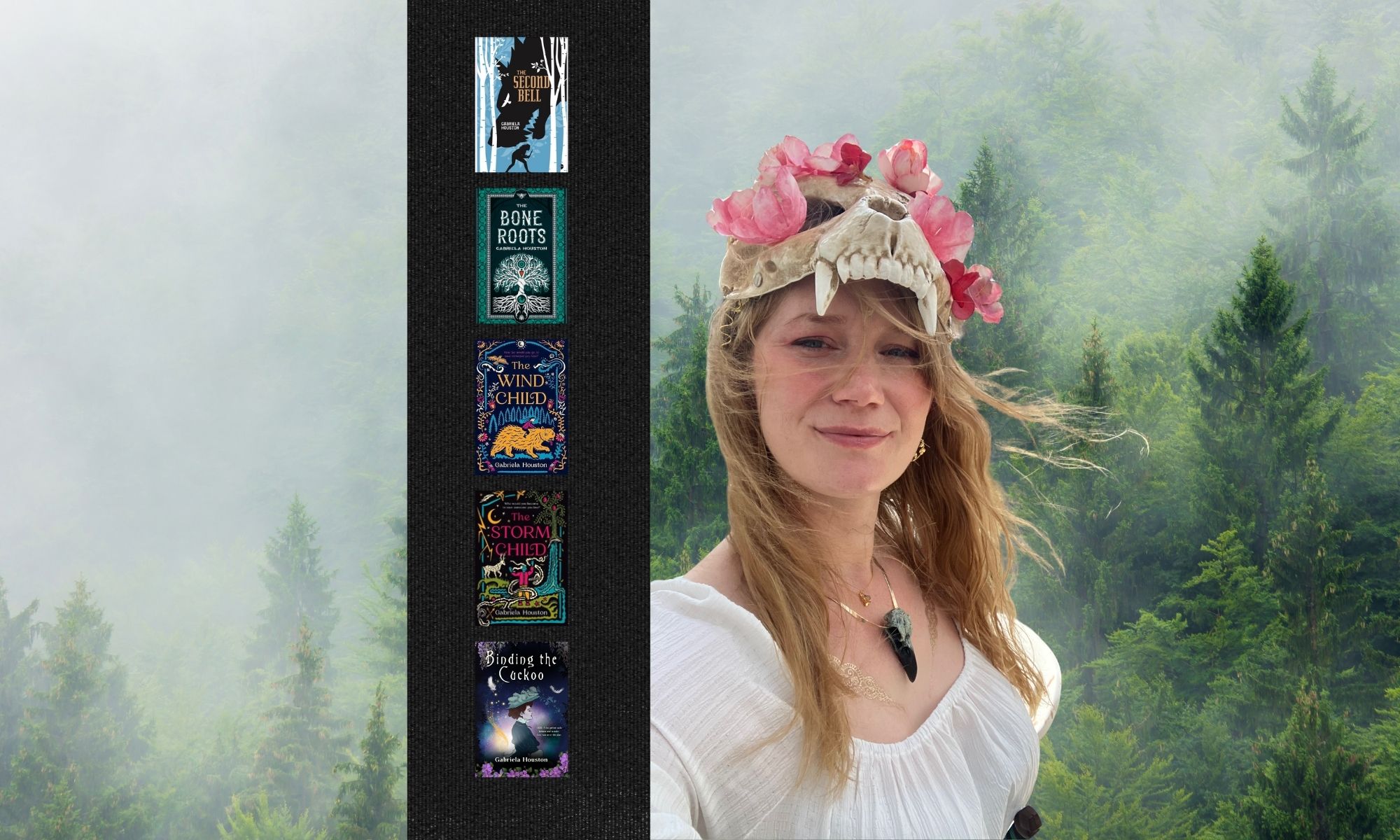
I asked on my social media what people would most like to see from me here. The answer was pretty unanimous: writing advice. So here it is. Let me know if there’s anything in particular you’d like me to cover here.
Now for today’s question: choosing the right narrative voice for the novel. 1st person or 3rd person POV?
From a reader’s perspective, there’s the personal preference, of course. But for a writer? The choice of voice is a crucial one.
In terms of your genre, in the first place, it’s worth asking what is the primary driver of the novel. In a fast-paced plot-driven story, the 3rd person narrative often makes more sense. It allows the writer to occasionally zoom in and out, getting closer to the character’s thoughts and emotions when necessary, but it also allows us to introduce the elements that the characters themselves might not notice or be aware of.
There’s a whole number of styles available within the 3rd person narrative. You can have the omniscient voice, high above the characters, or walk hand in hand with them, observing their every emotion. You can opt for a feigned neutrality, stripping away the adverbiage and the emotion, so nothing but the story is felt.
In the face of such a variety of options, why would you opt for the 1st person POV?
There are some situations where the story won’t work without the more intimate knowledge of the character’s inner life. Where that inner life IS the story, in all the ways that count. Where the question of their perception, of their reliability and biases, creates the very heart of the book.
Those questions (and more I haven’t yet thought of) are what we should be asking ourselves when starting a story. Whose story is it and how much does their perception truly matter? How can we best bring out the feelings and atmosphere we’re aiming for?
That decision might often be instinctive, but it is not simple.
So the title is somewhat exaggerated. I don’t really throw books across the room, but when faced with any of the below, I most certainly close them with disgust. As nearly every fiction writer, I’m a reader first. And in my reading journey, I’ve come across many lapses of writerly/editorial judgement. Many forgivable. Most forgettable. But then again, there’s the other type…
Of course writing it subjective, and so what repels me, might be the height of entertainment for others. But here are some things I absolutely hate coming across in fiction:
Pontificating is the top of the list. In the era of social media, being loud about every single thought running through our minds has become endemic. So much so that on occasion writers forget what their job it: to transport the reader into the world of their book. It is expressly not the place to copy and paste your least popular tweet, which you feel really ought to have gained more traction based on its pure incisiveness. Whether it’s politics you wish to discuss, or the state of education in your home country, or the way you think people REALLY OUGHT TO dress for an evening party, your book is not the place to vent those views. If it doesn’t serve the story, it belongs in the editorial bin.
Gross self-inserts. I was reading a novel some time ago, by a rather well-known author, where the young, feisty female protagonist is mooned over (in the most inappropriate and creepy way, frankly) by her, let’s call him “mentor”. This mentor is much older, in a position of authority over the female protagonist, and has no qualities that could possibly be attractive to the object of his desire. Yet, at a pretty randomly chosen point, the girl notices him. She suddenly sees him in a different light. The bumbling, boring-as-toast older man becomes interesting and masculine in her eyes. Little things she never noticed before light up a fire within… For no reason. Literally nothing’s changed in the older man. He did nothing note-worthy (in front of the female protagonist at least). And as the pages droned on, one couldn’t help but see the somewhat disturbing similarities between the mentor character and the author. And of course, I wouldn’t begrudge anyone the private fantasy of “punching above one’s weight”. But when written down, it is painfully obvious that that’s exactly what it is: the author’s self-indulgent fantasy.
Ye olde stylle of speech. Certain genres are particularly prone to this grievous sin. Sometimes a writer really really wants to show that the book is in fact set not in anything approaching a contemporary setting, but could very beautifully fit in the standards of the olden days. The temptation to rewrite everything in a style neigh incomprehensible to the modern reader can sometimes be too much to resist. The easiest way to indulge the urge is to pile in archaic vocabulary, mess with syntax, sprinkle in some schoolboy french and voila! A book with prose that resembles nothing in the history of the English language is ready! And while it doesn’t bother everyone equally, I find it distracting, occasionally hilarious (when eyes become “orbs” for example, to emphasise that before 1950s vocabulary was so much more refined), and mostly disappointing. There are many ways to transport a reader to a particular time and place. Misusing archaisms is not one of them.
I’m really excited to announce that this year I have two Slavic-folklore-inspired Fantasy novels coming out! Something for everyone: one for adults, one for children.
The first one, THE STORM CHILD, is the continuation of Mara’s journey from The Wind Child. The sequel (and the last part of the duology) comes out in the UK May 2023 from Uclan Publishing.
The Storm Child picks up a year after the end of The Wind Child. Mara, who had her human soul ripped out of her by God Veles, is on the run from Koschei the Deathless, whose soul she’d stolen. She travels with her shape-shifting best friend Torniv, and to survive they must strike deals with gods. But in the final showdown, how much are they willing to sacrifice to protect each other? And what are they willing to become in the process? The book is now available for preorder here.
My next adult book, THE BONE ROOTS, is coming out on both side of the pond from Angry Robot Books in October 2023.
The Bone Roots is a stand-alone story about two mothers willing to do anything to protect their children.
It’s been 40 years since the Fox took Kada’s brother. Though she ran and kept herself hidden, she fears it may be stalking her again, this time to steal her daughter.
Every year, Vedma Kada gives thanks to the bone roots – those that belong to the child-bearing tree who gave Kada her desperately-wanted baby, Secha. Kada lives her life in service of the bone roots and the goddess Zemya, but they cannot keep her daughter safe. Not when Secha’s emerging powers, both mysterious and brutish, threaten to out her for who she truly is…
Meanwhile Sladyana, a rich noblewoman, has spent the last fifteen years searching for her missing daughter, Luba. She was snatched from their home by the Fox thief and Sladyana has heard nothing from her since. But the one who gave Sladyana her daughter has come within her grasp once again, and so has the secret of her daughter’s fate.
I’m beyond excited to finally be able to say it: my book will be a real thing. A real papery thing! With a pretty, pretty cover, a fabulous editor and a wonderful marketing team behind it and a lot of other things commonly associated with published novels!
The fabulous Eleanor Teasdale from Angry Robot Books has acquired my Adult Slavic Mythology-inspired fantasy novel, The Second Bell, and it’s due to come out Spring 2021.
It’s a story of a young striga woman, Salka, who grows up in a world which believes her to be a monster. She struggles to harness the power of her second heart even as her mother is willing to sacrifice everything to stop her.
Here’s something nice my editor, Eleanor Teasdale, said about The Second Bell: “When I first heard the pitch for the book, I was worried it was too good to be true. Then it arrived in my inbox and blew me away with its magic. It’s a story with power, heart and the joy to be found from looking within yourself.”
Super excited to announce I have signed with John Baker from the well-regarded Bell Lomax Moreton Agency!
John found my Twitter pitch during last September’s PitMad event on Twitter (SO worth participating if you’re seeking representation).
Having someone so tremendously enthusiastic and knowledgeable in my corner makes all the difference.
It’s tremendously important to have an agent who shares your vision not just for the one book but for your writing career as a whole, and I was so impressed by how well prepared and full of ideas John was when we met for an interview/three hour long coffee.
I look forward to a long and fruitful partnership!
This has been a long couple of months, and I have largely kept my head down working on a few short stories for some upcoming anthologies (most of which I’m not supposed to talk about yet), and edits on my upcoming novel (which hasn’t been announced, and so I’m not allowed to talk about. Very helpful in creating newsletter content, that.)
But one anthology I can mention, at least, is the Vol 2 of Slavic Supernatural, which is upcoming from a small boutique Croatian, English-language publisher Shtriga Books. .
The first volume looks beautiful
The story I have submitted for vol 2 is about Baba Jagodowa (pronounced „Yagodova”), a creature from Polish folklore who looks after the forest berries and mushrooms. Very wholesome-sounding, no? (It’s a trick question).
Baba Jagodowa embodies some of that delicious moral relativity which I love about Polish pre-christian folklore. That there are creatures on this land undefined by their relationship to humans. Baba Jagodowa is entirely uninterested in us, as long as we don’t mess with her domain. And why should she be?
How beautiful that there are creatures who are allowed to simply exist outside of our wants, our needs and our desire to centre ourselves.
I look forward to sharing the story with you all once the book is out!
Now the two ladies running Shtriga Books, Antonija and Vesni along with their friend Igor, have also graciously invited me to their podcast, Mora FM, on writing and Slavic vibes.
It was such a treat, talking to fellow Slavs about the differences between Polish and Croatian folklore, as well as the publishing industry in general. I hope you might enjoy this episode, and let me know what you think!
So for something different today, I have decided to start a little series of interviews with authors I think deserve more notice and attention. I hope you enjoy it and please let me know your thoughts!
Hi Chris, thank you for agreeing to do the interview with me!
Let’s start with what are you focused on right now- between your novel Shitshow’s debut and the very special, illustrated edition of Daytide, you have your fingers in all sort of interesting pies! What’s the main focus?
It does seem like I’m dancing about quite a lot lately. And that’s true to an extent. As you know, publication order does not always mirror the order in which you write things. I wrote DAYTIDE originally in 2020 and finished it in 2022 after two full re-writes. I wrote the bulk of SHITSHOW in 2023 and it sort of sat there while I worked on some other things. Then, early in 2025, the opportunities came to publish both, so that’s how that all happened. Having now done pretty much the final art and polishing of DAYTIDE for publication, I’ve turned my attention chiefly to two new projects. One is a horror novel I’m writing with a friend of mine that we are doing mostly for fun. The second is my 2027 novel for Angry Robot. Very excited about that one, but can’t say a lot about it now (not being cute, I’m still figuring it out myself).
I loved reading Daytide many moons ago, and remember thinking at the time that it has a real “cult favourite” potential. It’s a big book – what was the big idea behind it?
I remember you reading this book and giving me some great feedback! It is a big book! I remember being in college and law school and thinking that it was a crime against humanity that anyone would ask me to write a paper exceeding thirty pages and this thing tops out at over five hundred! Who am I? Anyhow, the big idea behind DAYTIDE was that I had answered a question my daughter posed about why churches have steeples. Now, my answer was entirely made up, and she understands that her father regularly makes up answers to her questions as a matter of entertainment, but it did get me thinking…what if steeples were an antenna of sorts, or a waypoint for beings from somewhere else? It all bloomed from that epicenter. Sprawled, you might say. To your point, I think most people who read DAYTIDE will find themselves in a type story they’ve not seen before.
The special edition includes a lot of your artwork. How does your art inform your writing and vice versa?
one of Chris’ pieces
When I’m writing, all I’m thinking about is the writing. That isn’t to say that visualization isn’t important, because I’m doing that constantly as I’m drafting. I do think that I tend to paint my scenes cinematically, and that’s just how I think. As a visual artist, I’m a visual thinker. But I’m not possessed of any specific ideas about how I would paint or illustrate certain aspects of the story. On the other hand, the writing certainly informed the art that I ended up doing to accompany the story and I found myself reading back through it to make sure I had everything right, but also making my own decisions about visual details that I’d not given in the words. That’s one of the reasons I’m not rushing to put art with my stories. Most of the time I like to leave visualization up to the reader. But DAYTIDE was asking to be illustrated.
I really enjoy the playful aspect of your writing. You seem to really enjoy highlighting the grotesque in your books and visual arts. Do you simply enjoy them as a form of artistic freedom or do they serve another purpose as well?
If I have a modus operandi for my visual art and my writing, it is to be as evocative as I possibly can. And I suppose there’s a sort of sanguine joy pervading my descriptions, whether written or illustrated. I think that comes from my recognition that life isn’t to be taken for granted and I want to express my joy at being alive in everything I do. Part of that is by burying my teeth all the way up to the gums when I’m describing violence, body horror, or emotional arcs.
We live in very turbulent times. Do you use your writing as a means to process what is happening in the world or as a way to distract yourself from it?
I am one hundred percent using my writing to work through what is happening in the world. It’s not intentional, though it seems to be inevitable. From my debut THE PHLEBOTOMIST, through MORGAN BRIGHT, DAYTIDE, and even SHITSHOW, I’m attacking issues facing our society. Sometimes it’s very on the nose, and often it’s more of an oblique approach. But yeah, I can’t help but do it. And I do feel it helps me to understand our world better, even if I’m not solving all its problems.
The publishing industry is currently undergoing a lot of changes, not all of them great. What direction do you think publishing might go in the next few years?
Whew that’s a biggie. Some things about publishing are very exciting. I think indie is having a heyday right now. I publish on both sides of that ledger, with a steady diet of traditional work to go along with my indie stuff and there are well understood pros and cons to each. I think the best part of the indie world is the freedom. Look- I’m incredibly proud of SHITSHOW, but no traditional publisher was going to put that out. Sobelo Books did and it’s been very successful for them and for me. Indie is metal as fuck and I love that. Traditional pubs, on the other hand, mostly love to play it safe. They say they want to publish “genre-bending” work, but usually not until someone else has the courage to do it first. So, I have a pretty clear head about all that. At the end of the day, my job is to write. I don’t worry about where it will find a home or if it will find a home when I’m writing. On my toughest days, I try to remember that writing and creating are the things I love. If I can publish it too, then great.
What’s next for you?
Great question! I have stories coming out in the Punk2 Anthology as well as in the Taylor Swift “Look What You Made Me Do” horror anthology coming from Sobelo Books. DAYTIDE arrives on February 26, 2026, WORRY BOX hits shelves from Angry Robot on September 22, 2026, and then another horror novel in September of 2027. I also have yet another novel (KILL ME WITH FIRE) on submission right meeeeow!
You can grab an exclusive illustrated copy of Daytide here!
To learn more about Chris Panatier, check out his website!
I’ve been watching Bon Appétit, Your Majesty lately, a pretty delightful Korean time-travel drama about a Michelin-style chef who is magically pulled 500 years back in time, where she finds herself accosted by, and forcibly-hired by a despotic Joseon tyrant, who just happens to be a gourmet.
The show is hilarious and highly entertaining with its combination of slapstick and court-machinations-drama.
However, I’m anxiously awaiting the moment the show is destined to become a romance. Honestly, any episode now. The despot is played by a man too pretty to waste on a straight drama, I get it.
However, the show creators have made the choice in the early episodes to make the man entirely unredeemable. A capricious, murderous, lecherous tyrant, who threatens to murder or maim the female protagonist every ten minutes or so, is not exactly #relationshipgoals.
Looking at the moon wistfully when thinking of her is somehow not enough to make us forget he was wholly entertained by a competition where the losing cooks were to have their arms sliced off (he only let them go when a whole bunch of women including his grandmother, the entire kitchen staff and the female protagonist begged him on their knees, whereupon he stormed off like a toddler in a tantrum).
‘But he bought her pretty fabric she didn’t ask for!’ One might whine. ‘He drunkenly forcibly kissed her then maintained she should be thankful!’
Now, each country has its own brand of misogyny, and I am no way qualified to place this drama within Korean conventions. I might be missing context here.
But I can’t help but wonder if, like the US romcoms from the 90s and 00s, if women aren’t being systematically primed to again accept and normalise abusive behaviour in the name of love.
He almost murdered me, therefore he didn’t, therefore he loves me, is a bit of a mental stretch, to be honest.
But the show is entertaining, the show is great, the show makes me watch and absorb and laugh, yet I hope not quite accept what it’s serving.
For those who know: I have recently self-published something for the first time ever: a historical romantasy, Binding the Cuckoo, set in Gilded Age London.
So, to nobody’s surprise, self-publishing is hard, as I have found out. Harder by far than I’d anticipated. And, even with somewhat of a track-record, the truth is nobody is exactly waiting for another indie book. Anything that happens, happens because the author tortured themselves with yet another late-night marketing tutorial marathon.
And so the thing that must keep you going, the thing that makes all this effort fun, cannot be the hope of a sales outcome.
The true joy of writing, even in my more seriously-serious-Sirius books, for me sits in the little vignettes, the bits of funny dialogue on the margins of a story. A cheeky one-liner. An unhinged concept that has horrified my friends, and yet I find a way to smuggle in with a bit of cheeky humour.
I am such a serious writer, of course. An auteur, with an extra ‘eur’ for good measure. When I’m asked to pose as one.
But inside I so often feel like a kid, in my own, custom-designed playground. Where anything goes, and the slides go up, as well as down.
And if I want to add a little cuteness, then I shall do so.
Below I include a little extract, which I had included in my novel for no better reason than because it amused me. If it amuses you as well, well then my heart is full.
She almost jumped with the shock and ended up pushing the needle into her finger.
“Ouch! Stephen, you startled me!” She put the pad of her pricked finger in her mouth.
“Are you a bampire?” he asked, his pale eyes narrowing with suspicion.
“A bampire?” Her mouth hung open, as Posy’s son climbed onto the sofa next to her.
“A bampire,” he replied and rolled his eyes. “Open.” He leaned forward and put his fingers on Hare’s chin, to which she objected weakly.
The domovoy made a chortling sound from the edge of the sofa, then bolted before Stephen could turn his attentions to the very fluffy creature at Hare’s side.
“Steffen”!” Francine Winchfield burst through the door and stood like a diminutive valkyrie, her hands on her waist, all outrage. All she needed to complete the picture was a little horned helmet. “Why you do?” She gestured towards him.
“I believe Stephen was enquiring whether I’m a…” Hare glanced at him.
“A bampire.” He scoffed at his sister and went back to inspecting Hare’s mouth.
“Stephen, I would really like to know what you’re doing.”
“So would I.”
Hare’s heart leaped at the familiar voice. She looked to the door. Ernest stood behind Francine, his hands folded behind his back. But the moment she saw his face, any hope she might have held out left her. He wasn’t even looking at her, focusing his attention solely on Stephen.
“Steffen wants to check if Aunt Edwina is a bampire.” Francine turned to Ernest and spoke in the tones of a school mistress when addressing a particularly dense student.
“Indeed.” Ernest’s eyelid twitched, like he almost wanted to glance at Hare. Instead, he chose to address his niece. “Miss Walker is not your aunt, Francie.” There was tension in his voice.
Hare tightened her lips into a line. It’s not like she told the girl to call her an aunt. What did he want, for her to be mean to a child?
“Oh.” The disappointment made Francine’s mouth droop for a moment. Ernest picked up the girl and walked up to the seat opposite Hare’s.
“Stephen, why did you say Miss Edwina was the… the thing you said?” Ernest asked.
“She drank blood!” the boy pointed an accusatory finger at Hare.
“I beg your pardon?” Hare felt as if she was having an out-of-body experience.
Ernest looked equally puzzled.
“She did!” Stephen folded his arms. “She put a needle in her finger and then blood came out and then she put it in her mouth!” He grimaced and shook his head in disgust.
“Ah, I see.” Ernest nodded seriously. “Excellent powers of deduction there, Stephen.”
“Are not!” Francine stuck out her tongue at her brother.
“So what is the next step in your investigation?” Ernest placated Francine with a pat on the head and leaned forward. He was enjoying this.
“I will check her mouth.” Stephen nodded sagely. He’d reddened with pleasure at his uncle’s praise. “You always have to check the mouth of a bampire.”
I have just finished the absolutely transformative Butter by Asako Yuzuki, which gives such nuanced thoughts about women, their perception of themselves, and how their bodies are scrutinised in public. In the context of my own writing, it made me think of what we consider a happy relationship in fiction, especially in romance. While some level of objectification feels necessary (after all, romantic partners generally have to find each other attractive), in a lot of romance and romantasy novels I read lately, a lot of emphasis is put on the size disparity between the protagonists. The female characters are usually tiny, to a point of fetishism (with the notable exception of some Sarah McLean novels), with their partners being almost grotesquely larger.
The male romantic lead so often is portrayed as a bit dangerous, usually uncommunicative, with a very distinct strength/power disparity between himself and the female protagonist.
I wonder just how much of those differences come from the reader’s desire to relinquish control in a safe setting, and how much comes from our society’s fetishisation of toxic/controlling relationships. I personally tend to feel a bit uneasy with such scenarios, especially when such relationships are idealised in romances.
Whilst I’m not here to judge anyone’s preferences in reading, it is important to me to create a space in fiction for healthy, communicative and equitable relationships, and writing passion that comes from true connection, rather than the thrill of danger. And, most importantly, I want my readers to feel happy once they’re finished reading Binding the Cuckoo. I want them to feel confident that the protagonist is, in fact, quite, quite safe with her chosen partner.
I want my Happily Ever Afters to have no caveats to them. I like to write my romance romantic, and my horror horroresque. And I tend to leave the two distinct from each other.
There’s some exciting news, which I’ve been sitting on for a while. I have decided to dip my toes in self-publishing, emboldened perhaps by the experience of producing the anthology.
Binding the Cuckoo is an alternative-history, Gilded Age romance, inspired partially by the women’s suffrage movement and the domestic workers’ rights’ movements.
It’s the first volume in the “Daughters of Defiance” series, each volume telling a story of a different couple within the same social circle.
Like many fantasy readers, I’ve seen the rise of the “romantasy” genre, but as a romance reader as well, I thought there is space for a genre-mash that focuses on the romance more, rather than keeping it in the background. (I think there are a lot of Outlander fans out there that would agree with me on this).
And so this is a historical romance. Unapologetically, deliciously so. With a hint of magic and folklore, of course, because well… I’m still me.
ABOUT THE BOOK:
In the late 19th century, a scientific marvel allows scientists to open rifts into the realms of myth. Powerful creatures, weakened and stripped of their memories, are brought to serve the whims of the wealthy elite…
In 1899 New York, Hare, a young woman with a mythical secret, finds herself trapped into servitude to the wealthy elite. When an equally desperate schoolmistress, Miss Anne Bonningham offers Hare a chance at freedom, they embark on a daring plan. Disguised as “Miss Edwina Walker,” Hare navigates the treacherous waters of London high society, solely focused on securing a marriage and escaping her past.
However, amidst the glittering balls and intricate social games, Hare finds herself drawn to Ernest, a charming solicitor torn between duty to his friend and his undeniable attraction to her. As hidden agendas surface and a vengeful figure from her past threatens to expose her true identity, Hare must make a choice: embrace a life of comfort and security or choose freedom and a love that could shatter the very foundation of her world.
Binding the Cuckoo is a story of love, deception, and the fight for self-determination in a world where appearances can be deceiving, and the line between freedom and captivity is blurred.
Binding the Cuckoo is coming out on the 15th of October, and is now available for preorder. Look below for the virtual book tour dates!
Our successful kickstarter campaign last year has allowed us to create two beautiful editions of our folklore anthology: a paperback and an exclusive hardcover.
Now that all the backers have received their copies, we can distribute the remaining stock via The Broken Binding. But please note, the stock is very limited, so consider purchasing soon, to avoid disappointment.
Each of the twenty stories is illustrated with a hand-carved linocut print. No AI in sight. Slow art, one could say!
Again, thank you so much to all who believed in this project and helped me to bring it to life.
Those who follow me on social media might have seen me post cryptic reels of carving, inking and printing linocut illustrations. I have actually been working on a collaborative project with 19 talented authors.
Whispers in the Earth is an anthology of short stories inspired by world folklore, and how stories travel and grow over time. Each story illustrated by myself with a linocut print, and with smaller illustrations throughout, we offer different formats, from ebook to a super deluxe hardback collectible.
On the 21st of May, in a partnership with The Broken Binding bookshop, we are launching the Kickstarter campaign to raise money for this project.
Putting this book together is a dream come true for me. I love illustrated books, yet that’s exactly the kind of project that would be considered far too expensive and risky by most publishers. Kickstarter offers the opportunity to bring exactly this kind of an unusual project to life, by bringing artists and backers together.
If you want to hear more, you can sign up on the landing page
The first episode is now live, and I can tell you all the news I’ve been sitting on for a month and a bit while I’ve been secretly (not so secretly) recording the first few episodes.
THE GABRIELA HOUSTON PROJECT, is what I grandiosely named it (because it’s my project, duh.), is a series of conversations with eminently interesting people about how storytelling fits into their lives and professions. I interview writers (because I know a few of those, and they’re a cool bunch, generally speaking), artists, musicians, fundraising specialists, researchers, public speakers etc.
My first guest is authoor Stephen Aryan. We talk about his newest trilogy inspiired by Mongolian and Persian Medieval history.